
]
Residents in affordable housing and senior living communities can live in the same building for years, pass one another in hallways and elevators, attend the same activities, and still know very little about each other. Creating meaningful resident engagement is not always a matter of offering more programs. Sometimes residents simply need an easier way to discover the people around them.
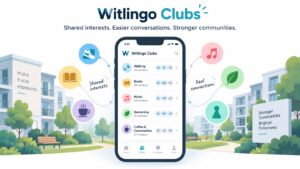
Witlingo Clubs is a resident engagement feature that helps residents discover neighbors who share their interests. Residents can join clubs centered around interests such as walking, books, gardening, music, games, technology, cooking, and arts and crafts, then see other residents in their community who share those interests.
That shared interest provides a natural reason to say hello, start a conversation, participate in an activity, and begin building stronger relationships within the community.
Every community can offer a curated collection of interest-based clubs, such as Walking, Books, Music, Movies, Gardening, Cooking, Games, Technology, Arts & Crafts, Sports, and Coffee & Conversation.
Residents can browse the clubs available in their community and join the ones that reflect their interests. When they view a club, they can also see which other residents belong to it. Suddenly, the person they pass in the hallway is no longer simply another resident. They may be someone who enjoys gardening, likes jazz, plays chess, or takes morning walks.
That small amount of information can make starting a conversation much easier.
Imagine a resident discovering that someone they regularly see in the lobby also belongs to the Walking Club. The next time they meet, the conversation does not have to begin from nothing. They can simply say, “I saw you're in the Walking Club too.”
That shared interest becomes a natural starting point. Witlingo Clubs is designed around a simple idea: sometimes people do not need another social network. They just need an easier way to make the first move.
Witlingo Clubs is intentionally simple. There are no feeds to maintain, posts to create, followers to collect, or complicated profiles to build. Residents simply join the clubs that interest them and can see others in the community who share those interests.
The goal is not to keep residents looking at a screen. The goal is to help them recognize people around them, discover common interests, participate in activities, and connect in the real world.
Residents can browse the clubs available in their community, read a short description of each one, see other residents who belong to the club, join or leave a club, and quickly see the clubs they have already joined.
Participation is intentionally lightweight. Residents do not need to create content, maintain an online persona, or learn a complicated new system in order to take part.
Housing staff remain in control of the experience. Administrators can choose which clubs are available, add clubs that are appropriate for their community, edit club names and descriptions, see who belongs to each club, and communicate directly with club members.
This allows each property to create a manageable collection of clubs that reflects the interests and character of its residents, while avoiding the clutter and moderation problems that can come with resident-created groups.
Clubs can also help service coordinators and property teams better understand where resident interest already exists. A Walking Club with twenty members might suggest an opportunity for a weekly walking group. A Gardening Club could reveal interest in a community garden, while a Music Club could help generate participation in a concert, music hour, or local outing.
Instead of guessing what residents may enjoy, staff gain another way to see the interests already present inside the community and use that information to shape programming and engagement.
Many residents would welcome more connection but hesitate to initiate it. They may wonder whether someone wants to talk, whether they would be bothering them, or whether they have anything in common.
Clubs provides some of that missing context. Both residents have already expressed an interest in the same subject, and that shared interest creates a small but meaningful sense of permission to approach one another. Witlingo does not attempt to manufacture friendships. It simply helps remove some of the friction that prevents friendships from beginning.
Most housing communication technology focuses primarily on communication between the property and the resident. Witlingo Clubs adds another important dimension by helping residents discover and connect with one another.
Property teams can continue using Witlingo to communicate notices, activities, reminders, and important information while also giving residents a simple way to discover people around them. Communication becomes discovery, discovery reveals common interests, common interests create conversations, and those conversations can become relationships.
Resident engagement can be particularly important in affordable housing communities, where service coordinators and property teams work to connect residents with programs, activities, resources, and one another.
Witlingo Clubs gives staff another way to support that work. Instead of relying only on scheduled events to bring people together, residents can discover shared interests throughout the year. A resident interested in gardening can discover other gardeners. Someone who enjoys walking can find neighbors who enjoy walking too. Staff can also see which interests are attracting participation and use that information to inform future activities and community programming.
The result is a lightweight approach to resident engagement that complements the work service coordinators and property managers are already doing.
Witlingo Clubs can also help senior living communities create more opportunities for residents to connect around shared interests. Clubs can complement activity calendars and scheduled programs by helping residents discover others who enjoy similar hobbies, interests, and routines.
Rather than asking residents simply to attend more activities, communities can make it easier for residents to discover the people with whom they may already have something in common.
Buildings bring people together physically, but proximity alone does not create connection. Witlingo Clubs gives residents a simple way to discover shared interests and a natural reason to begin talking to the people around them.
Witlingo Clubs helps make those first interactions easier, so neighbors can become familiar faces and familiar faces can become real relationships.
Schedule a demo and see how Witlingo helps communities communicate easily and effectively, track delivery, and document outreach.