
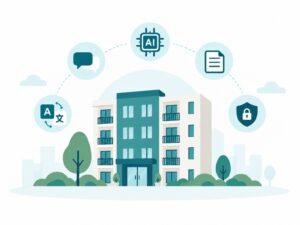
AI is being used for resident communication, translation, document summarization, leasing support, maintenance intake, analytics, administrative tasks, and staff productivity. It can help affordable housing organizations automate repetitive work while keeping staff in control of important decisions.
Yes. AI can help property managers draft notices, translate communications, summarize information, organize resident responses, answer routine questions, and reduce repetitive administrative work.
Yes. Service coordinators can use AI to create resident messages, translate information, summarize documents, prepare event announcements, organize responses, and communicate with residents more efficiently.
Never!
AI is suited to supporting staff rather than replacing them. Many affordable housing situations require judgment, context, empathy, discretion, and knowledge of individual residents. AI can reduce repetitive work so staff have more time for those responsibilities.
Key risks include inaccurate information, privacy concerns, fair housing issues, over-automation, lack of transparency, and insufficient human oversight. Organizations should define clearly where AI can assist and where a person must review or make the final decision.
Usually not. AI tools can complement systems such as Yardi, MRI, RealPage, and ResMan by supporting resident communication, translation, information processing, analytics, and other tasks around the core property management workflow.
Yes. AI can help staff create recertification reminders, explain required documents, translate messages, summarize resident responses, and support follow-up as deadlines approach. Staff should remain responsible for compliance-related decisions and resident-specific instructions.
Yes. AI can translate notices and messages into residents' preferred languages and can also translate incoming resident responses for staff. This can help affordable housing organizations communicate more consistently across multilingual communities.
Yes. AI can help staff create clearer messages, adapt communications for different audiences, translate content, summarize information, and prepare follow-up messages. When combined with multiple delivery channels, it can make resident communication faster and more consistent.
Yes. AI can help create and adapt the content used across text messages, phone calls, emails, mobile apps, and other communication channels. A communication platform can then distribute that content through the channels residents are most likely to use.
AI can help answer routine questions about office hours, events, required documents, maintenance procedures, inspections, and other commonly requested information. Questions involving eligibility, legal rights, compliance, or unusual resident circumstances should generally involve human review.
Yes. AI can help interpret maintenance messages, identify the issue being described, summarize the request, and organize information for staff. It can support maintenance intake, but urgent or safety-related issues should not depend solely on automated decision-making.
Yes. AI can turn long notices, policies, newsletters, meeting notes, and other documents into shorter summaries, frequently asked questions, resident-friendly explanations, or staff briefing materials.
Yes. AI can help rewrite complex information in simpler language, create shorter explanations, translate content, or turn written material into other formats such as audio summaries. Staff should review important communications before they are distributed.
Yes. AI can help identify communication patterns across communities, summarize activity, highlight unusual trends, and give regional or executive teams better visibility into what is happening across a portfolio.
AI and communication analytics can help organizations identify patterns such as bounced emails, invalid phone numbers, low response rates, or residents who rarely engage with communications. Staff can then decide whether another communication method or personal follow-up is appropriate.
AI can help make information available in multiple formats, including translated text, simplified language, audio, shorter summaries, and mobile-friendly content. This can make important information easier to access for residents with different communication needs.
It can be, but organizations should evaluate any AI system carefully. Important considerations include data privacy, security, access controls, data retention, vendor practices, and what types of resident information are being processed.
Start with a narrow, repetitive, relatively low-risk task. Good starting points include drafting resident notices, translation, document summarization, recertification reminders, and routine resident communications. Measure the results before expanding into additional use cases.
AI will likely become increasingly integrated into everyday affordable housing operations. The greatest value may come from practical applications that save staff time, improve communication, expand language access, make information easier to understand, and help organizations manage larger portfolios without adding unnecessary administrative burden.