
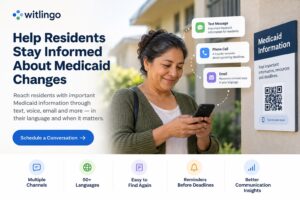
Medicaid rules are changing, and for some residents, those changes may mean new requirements, more frequent eligibility reviews, additional documentation, or new deadlines.
For affordable housing communities, this creates a communication challenge.
Residents may receive important Medicaid information by mail, email, text message, online portal, or through other channels. They may overlook a notice, misunderstand what they need to do, lose the original information, or simply forget to take action before a deadline.
Housing organizations do not determine Medicaid eligibility, and service coordinators and property managers should not be expected to become Medicaid experts.
But they can help make sure residents know that important changes are happening, know where to find authoritative information, and are repeatedly reminded when action may be required.
Medicaid provides health coverage to millions of Americans, including many people with limited incomes, older adults, and people with disabilities.
Changes to Medicaid eligibility requirements can therefore affect people living in affordable housing communities.
Beginning January 1, 2027, states generally must implement new Medicaid community engagement requirements for certain individuals, unless they choose an earlier implementation date. The requirements do not apply to everyone, and exclusions and exceptions exist. States are responsible for determining who is affected and how the requirements are implemented.
CMS has also created a dedicated Medicaid Eligibility Changes resource explaining that requirements can vary by state and directing beneficiaries to information specific to where they live.
That makes communication particularly important.
A resident may hear that Medicaid rules are changing without knowing whether the changes apply to them. Another resident may receive an official notice but not understand what action is required. Someone else may understand the notice but put it aside and miss a deadline.
The problem is not necessarily that information was never sent.
The problem is that information does not always successfully reach people, get understood, remain easy to find, and lead to action.
The federal government is requiring states to conduct outreach associated with the new community engagement requirements.
CMS guidance says states must provide affected beneficiaries with outreach notices by mail, or electronically if the individual has elected electronic communications, as well as through at least one additional format. Those additional formats may include telephone, text message, websites, and other electronic methods.
This creates an opportunity for affordable housing organizations to reinforce authoritative information inside the communities they serve.
Housing staff do not need to interpret Medicaid regulations for residents.
Instead, they can help residents:
- Become aware that Medicaid requirements may be changing.
- Know that they should pay attention to official Medicaid communications.
- Remember important deadlines.
- Find trusted state and federal resources.
- Locate information again after the original notice has been misplaced.
- Know where to ask for help when they have questions.
- Receive important information in a language and format they can understand.
Affordable housing staff already communicate with residents about recertifications, inspections, rent deadlines, maintenance, transportation, community events, health programs, benefits, emergencies, and many other issues.
Medicaid adds another potentially important category of information competing for residents' attention.
- A flyer placed under a door can be lost.
- An email can remain unopened.
- A notice posted in a lobby may never be seen.
- A long letter can be difficult to understand.
- Information written only in English may not be useful to a resident who is more comfortable reading another language.
And even when someone sees a message today, they may need to find that same information several weeks later.
Effective communication therefore requires more than simply sending a notice once.
It requires making important information easy to receive, understand, and find again.
Service coordinators and property managers can play an important supporting role without providing Medicaid advice.
- Reinforce Official Information: Staff can direct residents to Medicaid.gov, their state Medicaid agency, health plans, benefits counselors, or other authorized resources. CMS maintains current resources covering Medicaid eligibility, enrollment, and renewal processes.
- Remind Residents About Important Dates: A resident who intends to complete a renewal or respond to a request can still miss a deadline. Simple reminders can help residents remember that action may be required.
- Make Information Easy to Find Again: Important information should not disappear after a flyer is thrown away or an email becomes buried in an inbox. Communities can maintain a central location where residents can return whenever they need current information.
- Communicate Through More Than One Channel: Different residents rely on different communication channels. Some respond to text messages. Others prefer phone calls. Some use email. Others depend primarily on printed information or information posted around the property. Using multiple communication channels increases the likelihood that important information will be noticed.
- Make Information Accessible Across Languages: Language should not prevent residents from learning that they may need to take action. Where possible, communities should make important notices available in residents' preferred languages and provide audio alternatives for residents who have difficulty reading written materials.
Witlingo helps affordable housing organizations distribute important resident information through multiple communication channels while also making that information easy for residents to find later.
The platform is not a Medicaid eligibility system and does not determine whether someone qualifies for benefits.
Instead, Witlingo helps housing organizations communicate information from trusted sources more effectively.
- Ability to broadcast to the whole community or to a segment of the community: Staff can send one communication without manually contacting residents one at a time.
- Send Important Notices Through Multiple Channels: Service coordinators and property managers can communicate with residents through channels such as: Text messages, Automated phone calls, Email, Mobile notifications
- Communicate in Multiple Languages: Communities serving multilingual populations can make important information available in residents' preferred languages. This can help reduce the risk that a resident misses important information simply because the original communication was difficult to understand.
- Make Information Available on a Resident Bulletin Board: Important Medicaid information can also be placed on a community's digital bulletin board. Residents can return to the bulletin board whenever they need to find current information rather than relying on a flyer they may have misplaced weeks earlier.
- Give Residents Simple Access Through QR Codes and NFC: Communities can make the bulletin board available through QR codes placed on posters, newsletters, and community materials. Communities participating in the Witlingo NFC program can also give residents access by tapping an NFC key or tag with a compatible smartphone. Residents do not need to search through old messages to find the information again.
- Provide Audio Access: Important information can also be made available in audio form, helping residents who prefer listening or who have difficulty reading longer written notices.
Suppose a state Medicaid agency announces an important eligibility change or renewal requirement.
A service coordinator could:
The housing organization is not telling residents whether they qualify for Medicaid.
It is helping residents find and act on authoritative information.
Affordable housing communities already generate enormous amounts of resident communication.
The answer is not simply to send more messages.
The goal should be to make important information easier to notice, easier to understand, easier to retrieve, and easier to act on.
As Medicaid requirements evolve, that distinction may become increasingly important.
1. What Medicaid changes should affordable housing residents know about?
Medicaid requirements vary by state and by individual circumstances. Beginning January 1, 2027, new federal community engagement requirements generally take effect for certain Medicaid beneficiaries, although states may implement them earlier. Exclusions and exceptions apply, and residents should use official Medicaid resources to determine whether changes affect them.
2. Can affordable housing staff help residents with Medicaid?
Housing staff can help residents become aware of important information, find authoritative resources, remember deadlines, and connect with appropriate assistance. Eligibility determinations and individualized Medicaid advice should come from Medicaid agencies or other qualified organizations.
3. How can service coordinators help residents avoid missing Medicaid deadlines?
Service coordinators can reinforce official notices, send reminders through multiple communication channels, keep important information available in a central location, and direct residents to authoritative state and federal resources.
4. How can housing organizations communicate Medicaid information to residents?
Communities can use text messages, phone calls, email, mobile notifications, printed materials, digital bulletin boards, QR codes, NFC access, and other communication channels. Using several channels can help reach residents who have different communication preferences.
5. How can Medicaid information be made accessible to residents who do not speak English?
Housing organizations can make community notices available in multiple languages while continuing to link residents to official Medicaid information and qualified assistance.
6. What if a resident loses the original Medicaid notice?
Residents should contact their state Medicaid agency or access their state's official Medicaid resources. Housing organizations can also maintain links and general informational resources in an easily accessible community bulletin board so residents know where to begin looking for help.
7. Where can residents find official information about Medicaid changes?
Medicaid.gov provides current information about Medicaid eligibility changes, enrollment, renewals, and state specific resources. Residents should also consult their state Medicaid agency for requirements that apply in their state.
Critical information should not depend on a resident finding an old flyer, searching through weeks of text messages, or remembering where an email was filed.
Witlingo helps affordable housing communities send important information to residents and make that information easy to find again through multilingual communication, digital bulletin boards, QR codes, NFC access, audio, and multiple outbound communication channels.
Schedule a demo and see how Witlingo helps communities communicate easily and effectively, track delivery, and document outreach.