
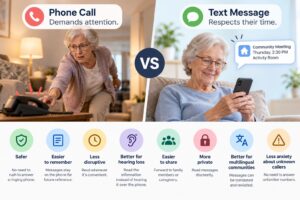
When it comes to keeping residents informed, how a message is delivered matters just as much as what it says. For routine announcements, text messaging (whether via email, SMS, or mobile app notifications) offers several advantages over phone calls, especially for older adults. Here are eight reasons why.
Residents do not have to rush to answer a ringing phone, potentially risking a fall or injury.
Phone messages disappear once heard unless recorded. Text messages remain available, allowing residents to revisit dates, times, and instructions whenever needed.
A phone call interrupts meals, sleep, conversations, and activities. Residents can read text messages whenever it suits them.
Residents who struggle to hear recorded announcements can read the information instead.
Residents can forward texts to family members or caregivers who help them manage appointments, deadlines, and other responsibilities.
Residents can read messages discreetly instead of having recorded announcements play aloud.
Text messages can be translated into residents' preferred languages, making information easier to understand and revisit.
Residents wary of phone scams do not have to answer unfamiliar numbers to receive routine announcements. Recognizable text senders help, although texts can also be fraudulent.
Not at all. Some residents prefer phone calls, cannot comfortably read texts, or do not have mobile phones.
The goal is not to eliminate phone calls. It is to make text messaging the default for routine announcements while keeping phone calls available for residents who need them.
At Witlingo, we help communities communicate through text, phone, email, and other channels, so residents receive information in the way that works best for them.
Schedule a demo and see how Witlingo helps communities communicate easily and effectively, track delivery, and document outreach.